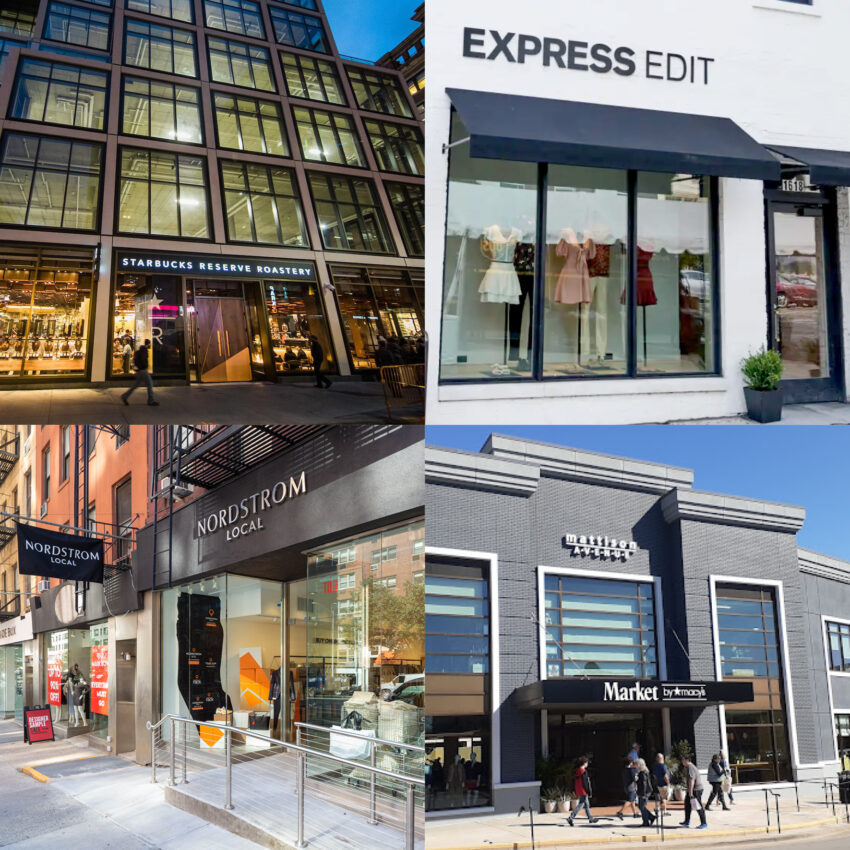
When I worked at Limited Brands in the 1990s-2000s, we spoke aspirationally about delivering “the right product to the right place at the right time.” That was hard. Today, it’s table stakes.
Retail now operates in the “Everything, Everywhere, All at Once” universe.
- Everything. Globalized supply chains. Marketplaces with infinite aisle. Consumers have quick access to hundreds of millions of SKUs.
- Everywhere. Stores. Ecommerce. Wholesale. Marketplaces. Retail media. Social commerce. AI platforms that will sit between brands and consumers.
- All at Once. Generative and agentic AI are compressing creation, analysis and decision-making from weeks to hours. Shopper discovery is shifting from search to prompt. The traditional funnel is collapsing.
Omnichannel once felt complicated. That was just the warm-up.
An Inflexion Point
I recently attended eTail West 2026 in Palm Springs. There, AI was not a breakout topic. It was the operating assumption. Across four days, here are five themes that surfaced.
Consumer Behavior Shifts
This isn’t simply about adding another channel to the mix. Consumers — particularly Gen Z and Gen Alpha — are increasingly prompting rather than searching. They expect synthesized answers, curated results and faster decision support.
One speaker described the shift as moving from “sifting to synthesizing.” If discovery becomes synthesis, brands must think beyond traffic acquisition and focus on structured relevance — how product data, content and context are interpreted by AI-driven interfaces.
Several leading brands discussed reworking product content, taxonomy and site architecture so they are understood by large language models. That is basic discoverability in a new environment.
Automation Expands
AI applications have moved beyond creative testing and media optimization. Executives are exploring applications in supply chain forecasting, inventory allocation, pricing, customer and merchant analytics, etc.
This does not necessarily mean wholesale workforce disruption. It does mean productivity expectations are rising. Retailers who integrate AI into their operating cadence — rather than treating it as an isolated tool — are likely to see meaningful gains in speed and margin discipline.
Personalization Proliferates
Personalization is not new to retail. What is new is the scale at which it can now operate. Advanced personalized execution dramatically outperforms static campaigns, but when asset production expands exponentially, workflow and governance must evolve.
This is personalization at industrial scale. It requires clearer guardrails, more structured testing and tighter alignment between marketing, merchandising and analytics.
The Funnel Collapses
For decades, retailers optimized awareness, consideration and conversion as distinct stages. Today, research is expanding across platforms while purchase pathways are compressing.
Search is not disappearing. It is evolving. Structured product data, clear positioning and strong content depth matter more than ever in ensuring visibility within AI-driven interfaces.
Anxiety Spreads
These fast-moving parts are creating fear: fear that a competitor will discover the secret sauce and deploy faster; fear that an AI error will create reputational damage; fear that roles will disappear; fear that legacy advantage will evaporate.
A Way Forward
The goal is not to chase every AI application. It is to build capability deliberately.
Start With Strategic Clarity
Revisit fundamentals: who are we for, what problems do we uniquely solve and where do we have defensible differentiation? Without clarity, AI accelerates noise. How will generational shifts, supply chain and product trends, and AI advances impact the industry? Scenario modeling three-to-five years forward will help clarify priorities.
Protect the Brand While Scaling the Machine
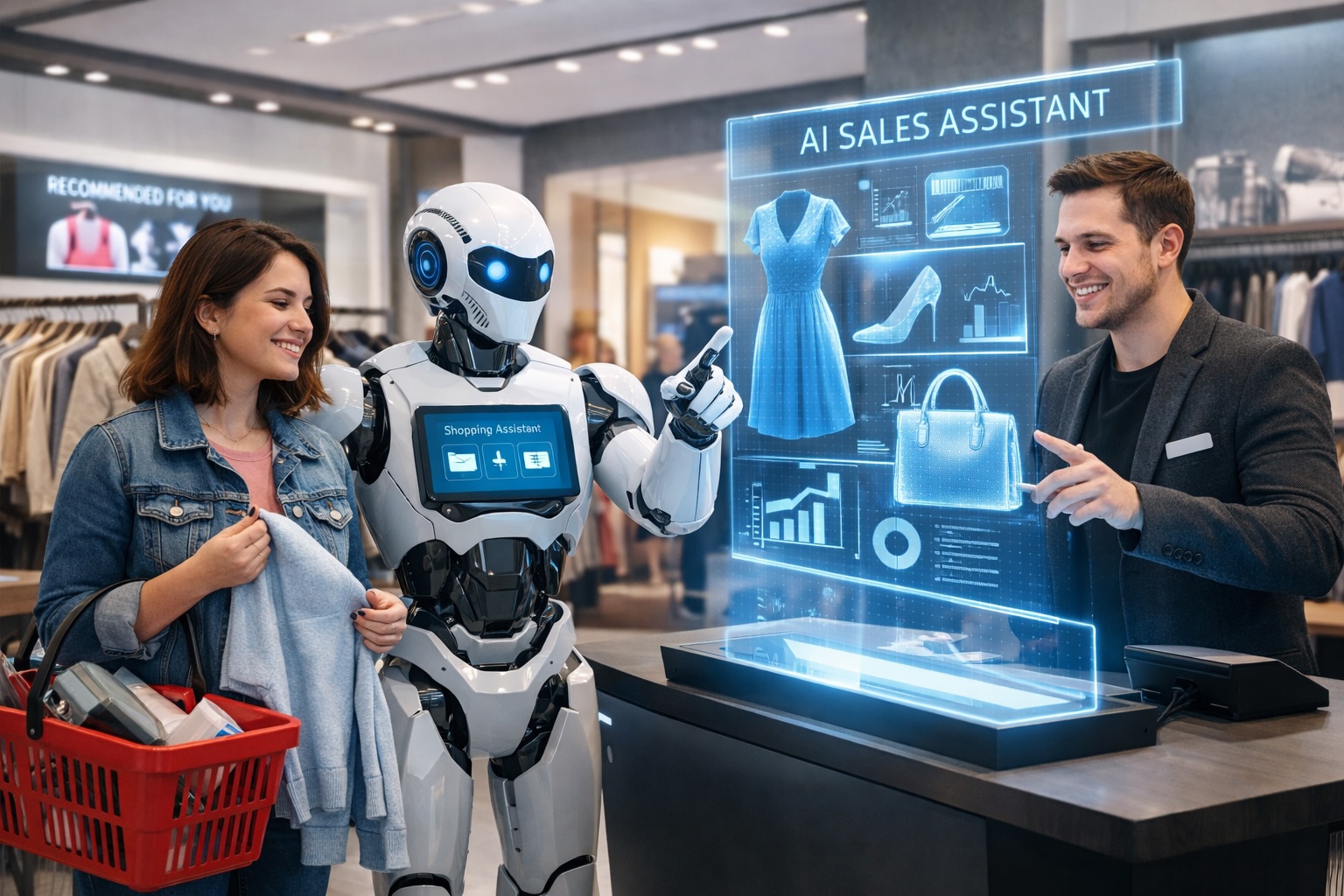
Automation without identity equals commoditization. One speaker said it bluntly: “You cannot use a robot when you are building a brand.”
Machines can
optimize performance marketing. They cannot create a cultural moment.
Ask yourself, are we automating execution — or automating identity?
Preserve Agility
AI capabilities and attendant business and shopping behavior applications will continue to evolve rapidly. The pandemic had forced retailers to move fast, test quickly and partner creatively. It’s more important than ever to maintain or re-create these adaptive organization structures. Several companies mentioned creating ad hoc teams, some including vendors, to address urgent and systemic business issues.
Meet the Moment
In the 1990s, right product, right place, right time was ambitious. Today leaders are solving for right product, right place, right time, right channel, right content, right cost structure and right talent model — all at once.
AI will not replace retail fundamentals. It will raise the bar on execution. The retailers who thrive will align strategy, operating model and technology with discipline and clarity.